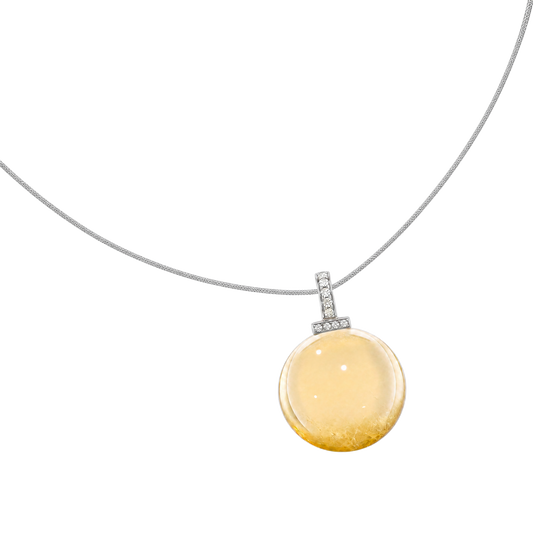
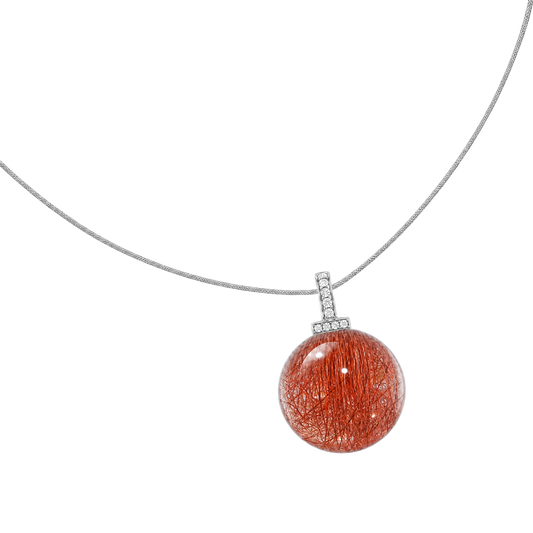
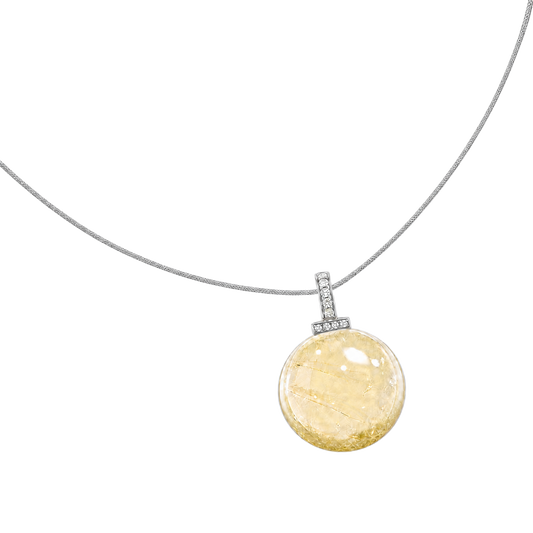
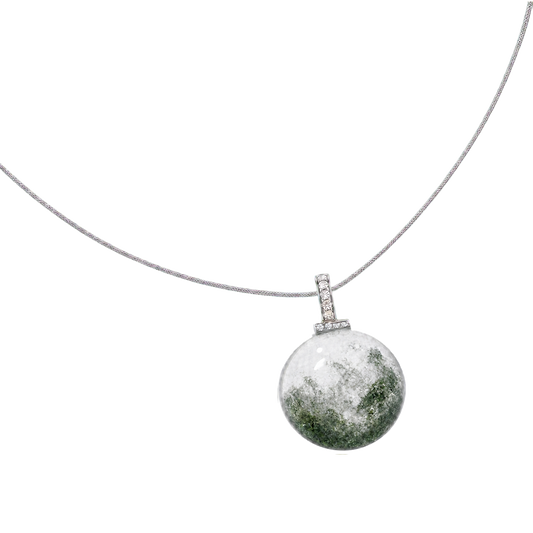
What Type of Crystal Is This? A Bracelet Shopper's Guide

If you have ever looked at a bracelet and searched "what type of crystal is this," the fastest answer usually comes from visible clues: color, transparency, internal lines, layered shapes, shimmer, and the way each bead looks on the wrist. Aerse Search Console exports show steady discovery around crystal types, crystal formations, how to choose crystals, phantom quartz, and rutilated quartz, so this guide turns those broad questions into a practical bracelet shopper's checklist.
The goal is not to memorize every mineral name. For jewelry, the useful skill is learning what visual feature you are reacting to. Fine threads point you toward rutilated quartz. Inner landscapes point you toward phantom quartz. A soft flash can point you toward moonstone. Clear, pink, purple, yellow, and green color families can help narrow the rest. Crystal meanings can add personal symbolism, but Aerse treats them as supportive style language, not as a promise of a guaranteed result.
If you want examples as you read, compare Green Rutilated Quartz, Gold Rutilated Quartz, Green Phantom Quartz, Blue Moonstone, Clear Quartz, and Citrine while you move through the checklist.
Quick answer: identify the crystal by its strongest visual clue
Start with the feature that jumps out first. If the bead is mostly transparent with visible hairlike needles, you are probably looking at a rutilated quartz family stone. If the bead has cloudy layers, ghost-like shapes, or mountain-like internal zones, phantom quartz is a better starting point. If the bead looks calm until it catches light, then gives a blue, silver, or pearly flash, look at moonstone.
If there is no obvious formation, use color as the second clue. Clear beads often lead to clear quartz. Purple beads may be amethyst. Warm yellow beads may be citrine or lemon citrine. Soft pink beads may be rose quartz. Green beads can point in several directions, so look for whether the green appears as fine threads, inner landscapes, or a more even body color.
This order matters because formation often tells a more specific story than color alone. A green crystal with needles and a green crystal with layered phantom shapes are not the same shopping question, even if both look green from far away.
Rutilated quartz: look for fine internal needles
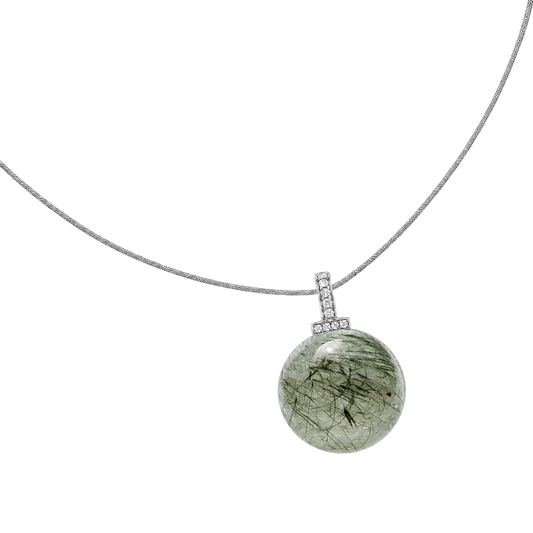
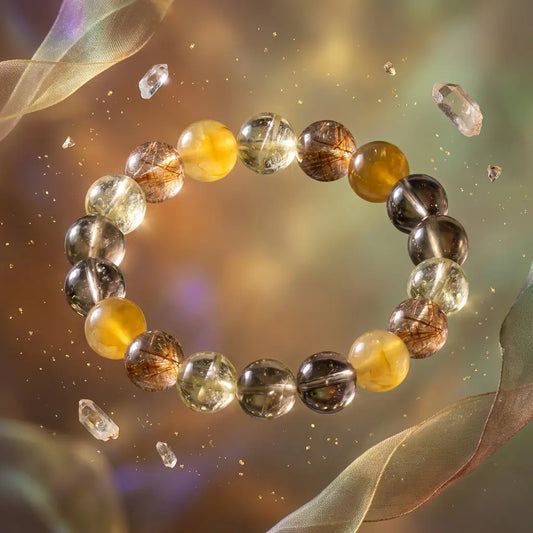
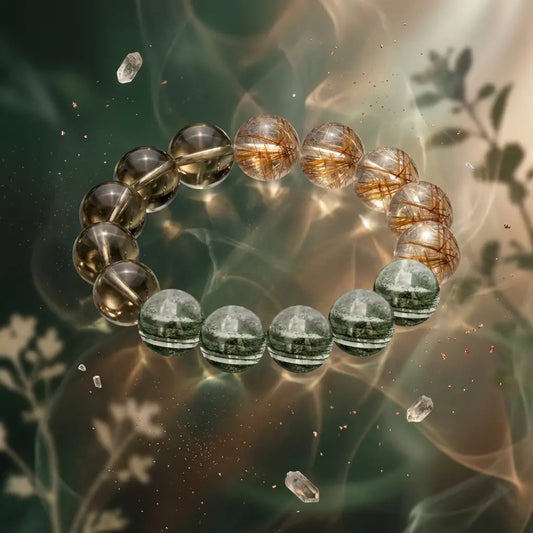
Rutilated quartz is one of the easiest bracelet types to recognize because the inclusions look like fine lines or threads inside the quartz. Those lines may read gold, yellow, green, white, red, blue, or smoky depending on the stone and lighting. The appeal is visual movement: each bead looks slightly different, so the bracelet feels detailed without needing a complicated setting.
For a direct example, Green Rutilated Quartz is useful when you want a cooler, nature-led color with visible internal linework. Gold Rutilated Quartz feels warmer and dressier because the threads echo gold-tone jewelry. Yellow Rutilated Quartz is brighter and sunnier, while White Rutilated Quartz gives a cleaner neutral look.
When comparing rutilated bracelets, do not only ask which color has the strongest symbolic meaning. Ask whether you want high contrast, softer threadwork, a warmer or cooler tone, and whether the bracelet should stand alone or sit inside a stack.
Phantom quartz: look for inner layers and ghost shapes
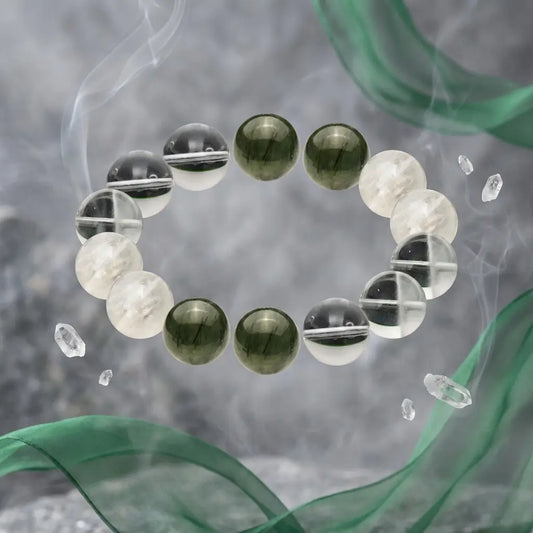
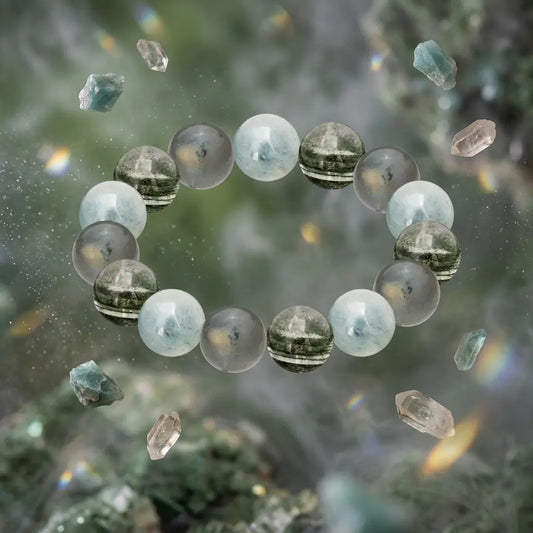
Phantom quartz has a different visual signature. Instead of needle-like lines, you may see cloudy layers, shadowy zones, or shapes that look like a crystal outline inside the bead. That inner landscape is what makes phantom quartz especially useful for shoppers who like stones with depth and variation.
Green Phantom Quartz is a clear starting point when the shopper wants a green bracelet with layered internal scenery rather than fine threads. If you are comparing it with Green Rutilated Quartz, the easiest distinction is texture: phantom quartz feels misty and layered; rutilated quartz feels linear and threaded.
Phantom quartz can be a good choice when someone wants a bracelet that looks organic, slightly mysterious, and different from bead to bead. Keep the styling simple: let the internal formation do the work, then pair it with clear quartz, moonstone, or a quieter bracelet when you want the stack to feel balanced.
Moonstone: look for soft flash, glow, and quiet color shift
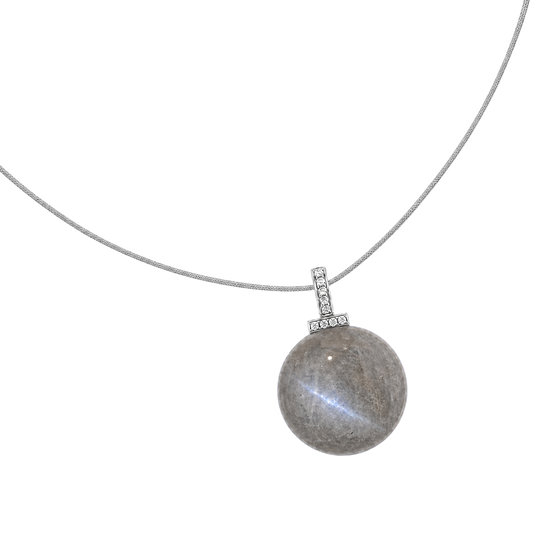
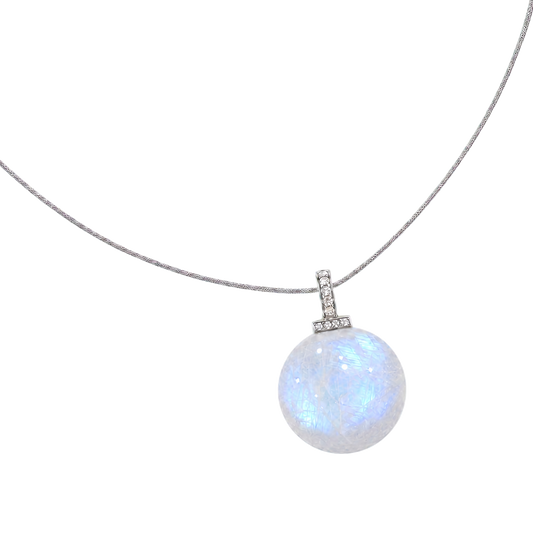
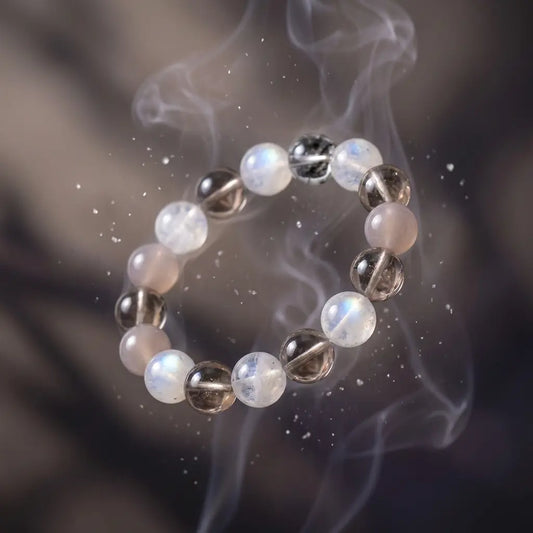
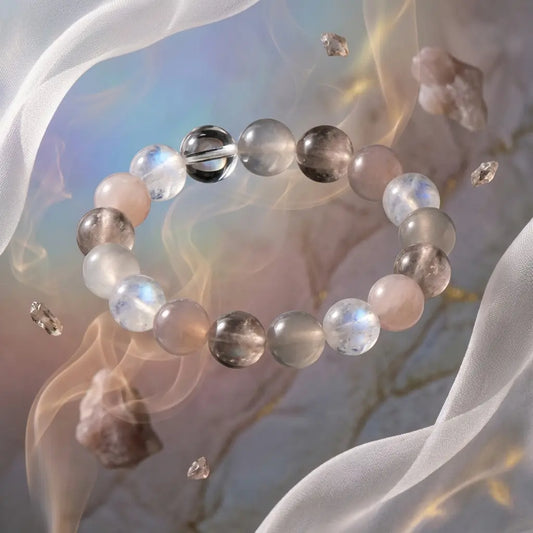
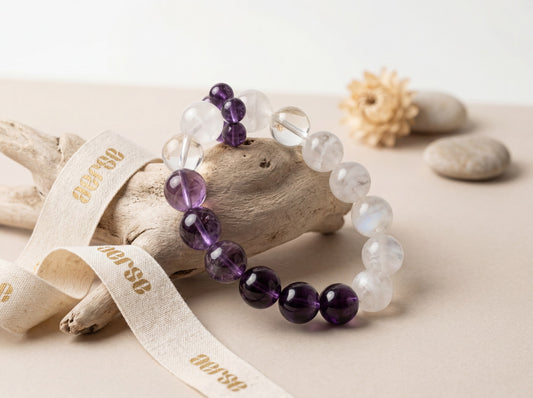
Moonstone is usually identified by light behavior rather than a strong line or layer. A bead may look grey, white, or blue at first, then show a soft flash when the wrist turns. That glow is why moonstone bracelets often feel gentle and atmospheric rather than graphic.
For Aerse examples, Blue Moonstone is the clearest product link when the shopper wants a cooler flash. Gray Moonstone is more restrained and neutral, which makes it easier to wear with office outfits, black basics, silver-tone jewelry, or soft knitwear.
If you are deciding between moonstone and clear quartz, ask whether you want light movement or pure transparency. If you are deciding between moonstone and aquamarine, ask whether the look should feel glowing and cloudy or clearer and more blue-green.
Clear, yellow, purple, and pink stones: use color after formation
Some crystal bracelets are identified mainly by color and clarity. Clear Quartz is the most flexible choice when the shopper wants transparency, brightness, and an easy companion for stronger stones. It works well between rutilated, citrine, rose quartz, and moonstone pieces because it gives the stack visual space.
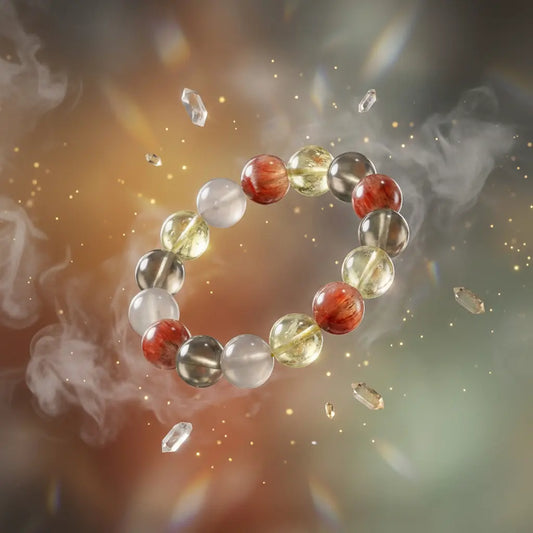
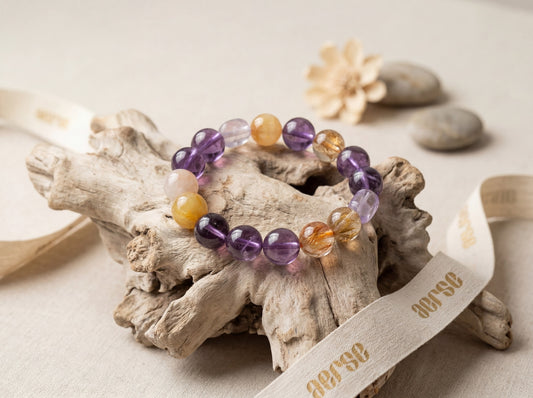
Citrine and Lemon Citrine sit in the yellow family, but they create different styling effects. Citrine reads warmer and more golden. Lemon citrine feels fresher and brighter. Choose by wardrobe first: warm neutrals and gold-tone accents favor classic citrine, while white shirts, pale denim, and summer basics make lemon citrine easy to wear.
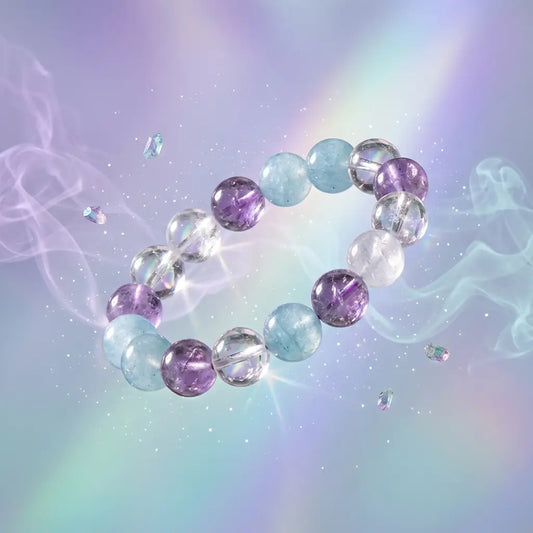
For purple, Brazilian Amethyst gives a more saturated amethyst direction, while softer combinations such as Pink Snow Phantom Quartz Amethyst Harmony Bracelet blend purple, phantom texture, and a finished zodiac-style composition. For pink, Madagascar Rose Quartz and Star Rose Quartz help shoppers compare softer pink color stories.
How to choose a bracelet once you know the crystal type
After you identify the type, choose by use case. For everyday wear, pick the bracelet that matches the colors you already repeat: black, white, denim, grey, cream, navy, green, or gold-tone accents. For gifting, choose the visual reason first, then add a short personal note. A sentence like "I picked this because the inner threads felt distinctive and easy for your everyday style" is more useful than overstating what a stone can do.
For a first Aerse bracelet, Clear Quartz is the easiest neutral. For visible detail, choose a rutilated quartz bracelet. For internal scenery, choose phantom quartz. For soft flash, choose moonstone. For warm brightness, choose citrine or lemon citrine. If two options both look right, choose the one that fits the recipient's existing jewelry metal and clothing palette.
| Visual clue | Likely crystal type | Aerse example |
|---|---|---|
| Fine internal threads | Rutilated quartz | Green Rutilated Quartz |
| Layered ghost shapes | Phantom quartz | Green Phantom Quartz |
| Blue or pearly flash | Moonstone | Blue Moonstone |
| Pure transparency | Clear quartz | Clear Quartz |
| Warm yellow color | Citrine | Citrine |
| Soft pink color | Rose quartz | Madagascar Rose Quartz |
Common questions about crystal types
What type of crystal is easiest to identify?
Rutilated quartz is often easiest because the internal needles are visually distinct. Moonstone is also recognizable when the bead shows a soft flash as it moves.
Are crystal formations the same as crystal colors?
No. Color tells you what the bracelet looks like from a distance. Formation describes visible structure, such as needles, layers, clouds, or inner shapes. Formation can make two green bracelets feel completely different.
Should I choose by crystal meaning or by appearance?
Choose by appearance first. If the color, clarity, and bead character fit your real wardrobe, the symbolic meaning will be easier to enjoy over time.
What is a good first crystal bracelet?
Start with Clear Quartz if you want a neutral bracelet, Green Rutilated Quartz if you want visible inclusions, or Blue Moonstone if you want soft light movement.
The simplest way to answer "what type of crystal is this" is to name the clue before the meaning: needles, layers, flash, transparency, or color. Once you know what your eye is seeing, choosing an Aerse bracelet becomes more specific, more personal, and easier to repeat with confidence.