Crystal Formations in Jewelry: Phantom, Rutilated, and Clear Quartz

If you have searched for crystal formations, crystal formation types, or how to choose crystals, you are probably trying to solve a visual question rather than a geological one. You want to know why one bracelet looks soft and layered, another looks bright and needle-filled, and another feels clean and minimal on the wrist. That is where formation becomes useful in jewelry. It gives you a faster way to compare pieces before you decide which one belongs in your daily rotation.
This is a timely question in June, when lighter sleeves, holiday packing, and simpler outfits tend to make bracelets more visible. A stone that looked subtle in winter can feel much more noticeable in summer daylight. Instead of treating formation as technical jargon, it helps to read it as a design clue: what is happening inside the stone, and how does that change the way the bracelet wears?
Aerse works best when it keeps meaning supportive and style practical. In that spirit, this guide focuses on three crystal formations that shoppers often compare in jewelry: phantom quartz, rutilated quartz, and clear quartz. They can all live in the same wardrobe, but they create very different moods.
What crystal formations mean in jewelry
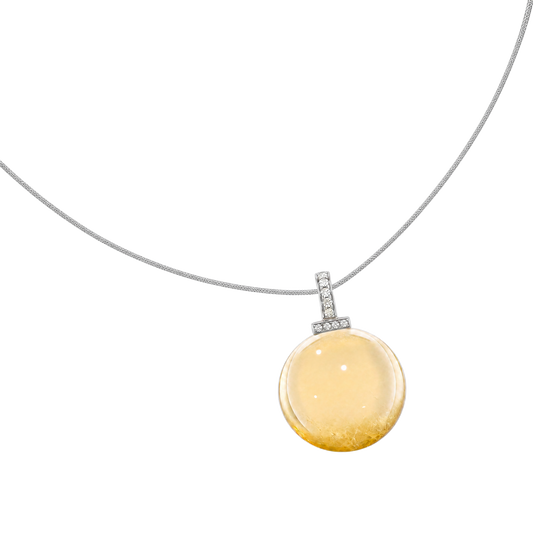
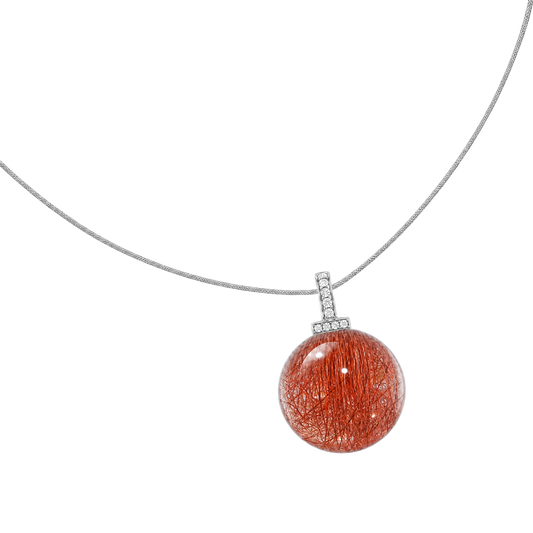
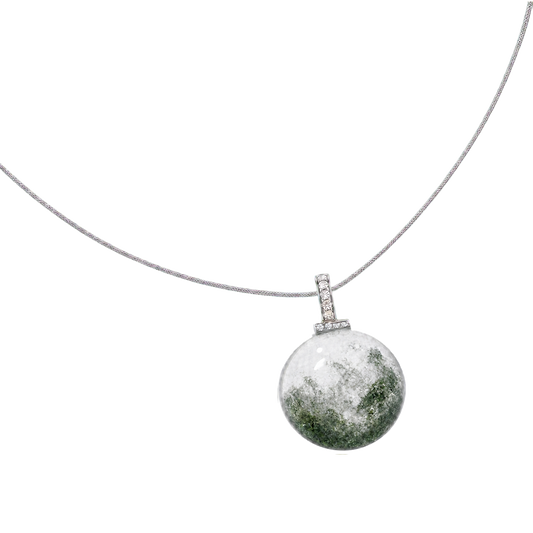
In jewelry, crystal formation refers to the internal structure or visual pattern you can see inside the stone. Some crystals look mostly clear. Some contain wispy layers, color zoning, or ghost-like shapes. Others show threadlike inclusions that catch light and make the bracelet feel more energetic from a distance. These details matter because they affect how the bracelet reads when worn, not only how it is described online.
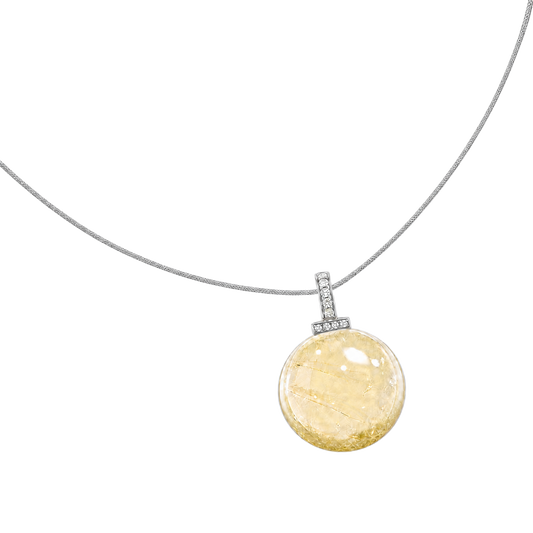
The simplest way to compare formation types is to look at three things together: internal texture, light response, and styling range. Clear quartz usually reads open, bright, and adaptable. Phantom quartz tends to show layered depth, which makes it feel more atmospheric and collected. Rutilated quartz often has visible needle-like inclusions, so it brings more movement and character even when the overall palette stays neutral.
If you only remember one rule, use this one: formation is the part of the stone that changes how much visual story the bracelet carries on its own. The more visible the internal pattern, the less you need from the rest of the outfit.
| Formation | What you notice first | Best for |
|---|---|---|
| Phantom quartz | Layered or ghost-like depth inside the stone | Readers who want texture and a more collected look |
| Rutilated quartz | Needle-like inclusions that add motion and contrast | Shoppers who want a bracelet with visible energy and pattern |
| Clear quartz | Brightness, transparency, and a clean finish | People who want maximum versatility and easy pairing |
Phantom quartz vs rutilated quartz vs clear quartz
Phantom quartz is usually the best choice when you want a bracelet that rewards a closer look. The inner layers create a sense of depth, which can make the piece feel personal and a little more niche. In a bracelet stack, phantom quartz often behaves like the most textured voice in the group. It is rarely loud in color, but it has enough internal detail to keep the eye moving.
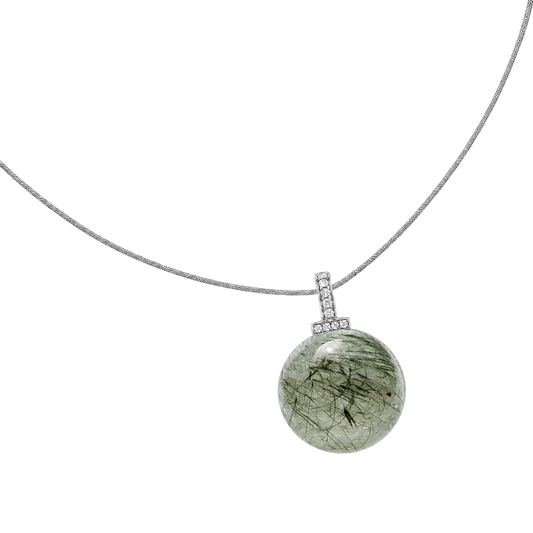
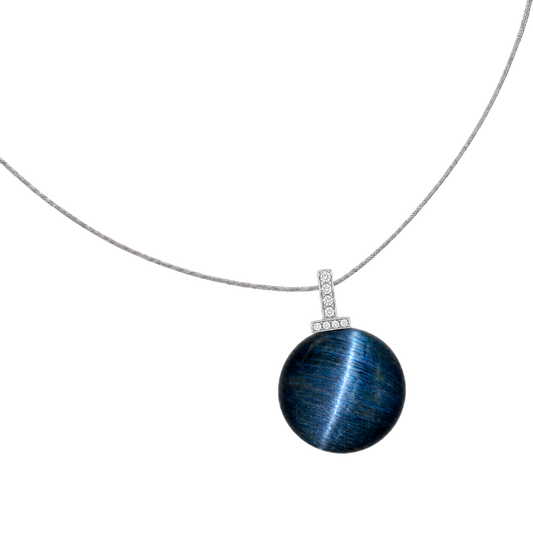
Rutilated quartz creates a different effect. Instead of soft layers, you see fine strands or needle-like inclusions. That is why shoppers searching for blue needle quartz or rutilated quartz jewelry often want photos and real styling context. The formation itself changes the mood. It can make a bracelet feel more directional, more lively, or more graphic, especially in bright light.
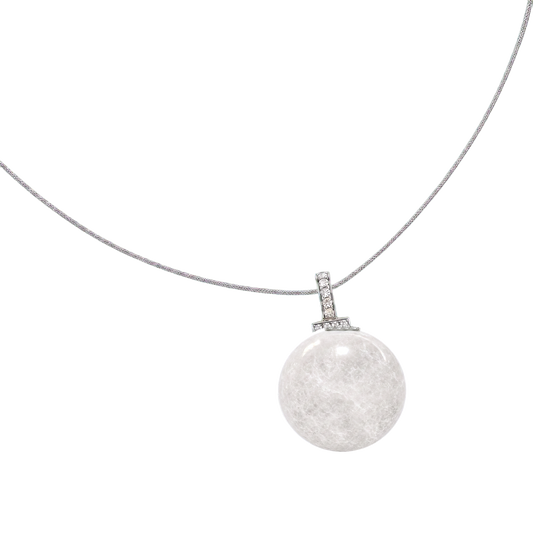
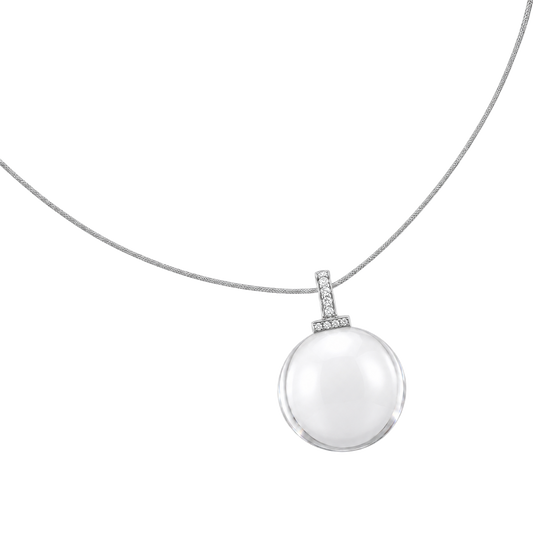
Clear quartz is the easiest baseline. It does not rely on bold color or strong internal pattern, so it tends to work with almost everything. If phantom quartz is about depth and rutilated quartz is about visible motion, clear quartz is about clarity and flexibility. It is often the best reference point when you are comparing multiple bracelets and trying to understand which one will feel effortless enough to wear often.
- Choose phantom quartz when you want layered texture and a more reflective mood.
- Choose rutilated quartz when you want the bracelet to show more pattern and visual movement.
- Choose clear quartz when you want the cleanest and most adaptable everyday option.
How to choose a formation for your wardrobe and routine
The easiest shopping mistake is choosing only by abstract meaning and ignoring how the bracelet actually looks with your clothes. A better approach is to match formation to the role you want the bracelet to play. If it needs to disappear into daily wear, choose clarity. If it needs to add interest to simple outfits, choose texture. If you want a bracelet that feels more expressive without depending on strong color, choose a piece with rutile.
Start with your wardrobe. Clear quartz suits white shirts, black knits, light denim, work basics, and travel capsules because it does not compete with much. Phantom quartz works especially well with monochrome or smoother fabrics because the stone already carries detail. Rutilated quartz often looks strongest when the rest of the styling is clean enough to let the internal lines stay readable.
Then think about repetition. Many people ask how to choose crystals as if the answer must be spiritual first. In practice, the best bracelet is usually the one you can imagine wearing twice a week. If you like quiet polish, clear quartz will probably win. If you like a sense of dimension, phantom quartz often feels more satisfying. If you want a bracelet that catches attention in sunlight, rutilated quartz makes more sense.
- Pick the outfit role first: background, texture, or focal point.
- Check whether your wardrobe leans cool, warm, minimal, or layered.
- Choose the formation that still feels wearable on an ordinary weekday.
- Let meaning support the choice rather than overrule fit and comfort.
Aerse bracelet examples that show the difference clearly
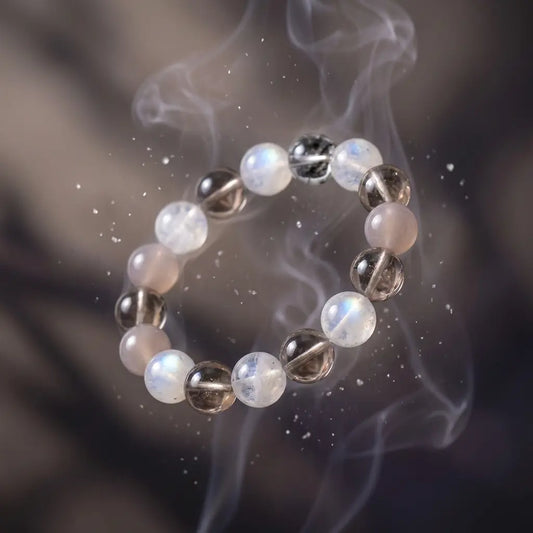
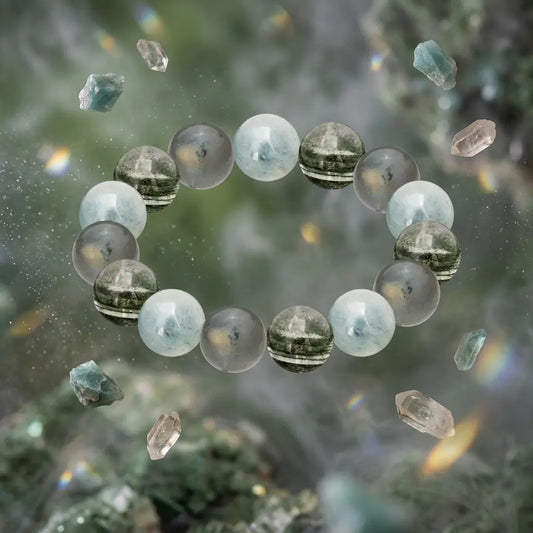
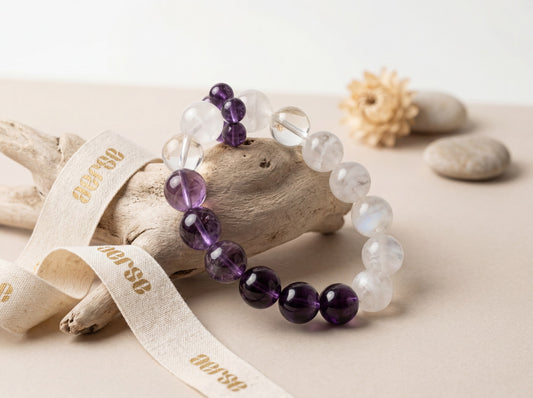
The Amethyst Moonstone Phantom Quartz Bracelet is a strong example of how phantom quartz adds depth without needing a loud palette. The stone structure gives the bracelet a more layered presence, while the surrounding moonstone and amethyst keep the overall look soft enough for repeat wear. If you are curious about crystal formation types because flat, uniform bracelets feel too simple, this is the kind of piece that explains phantom quartz quickly.
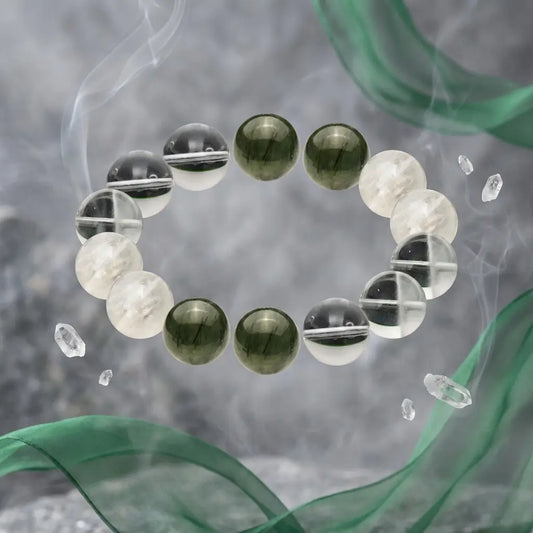
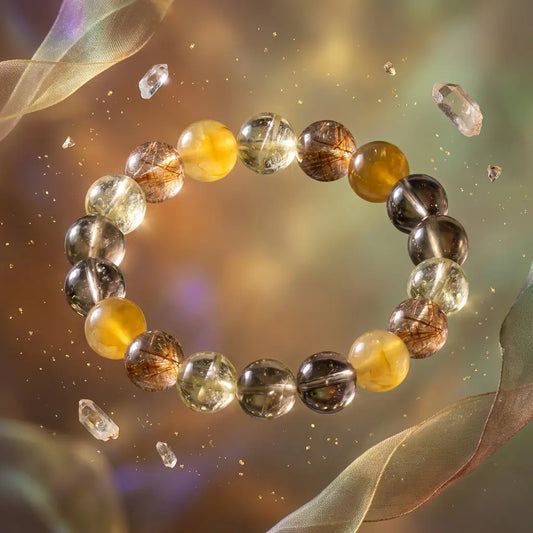
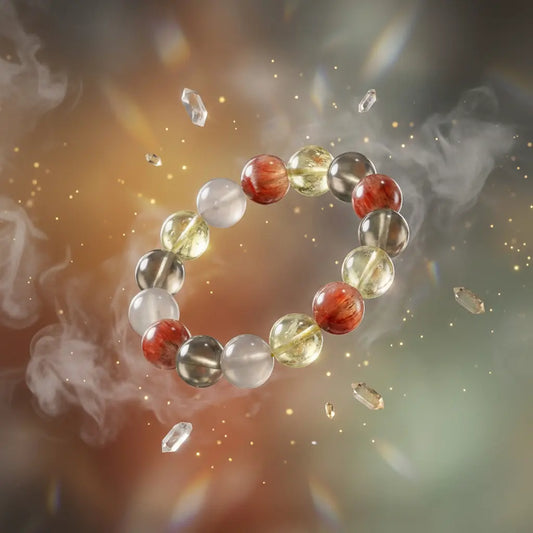
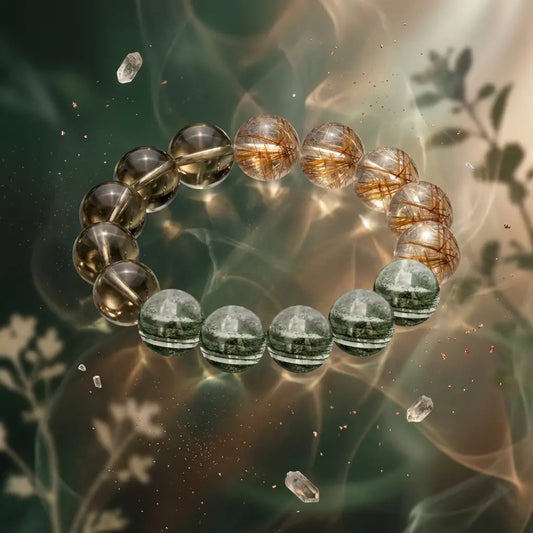
For rutilated texture, the Gemini's Radiance Phantom and Rutilated Quartz Bracelet shows how needle-like inclusions change the rhythm of a design. This matters for readers searching rutilated quartz jewelry or blue needle style queries, because the appeal is often the visible line work inside the stone. A bracelet with rutile can feel brighter, busier, and more animated than a plain transparent quartz bracelet, even when the size and silhouette stay similar.
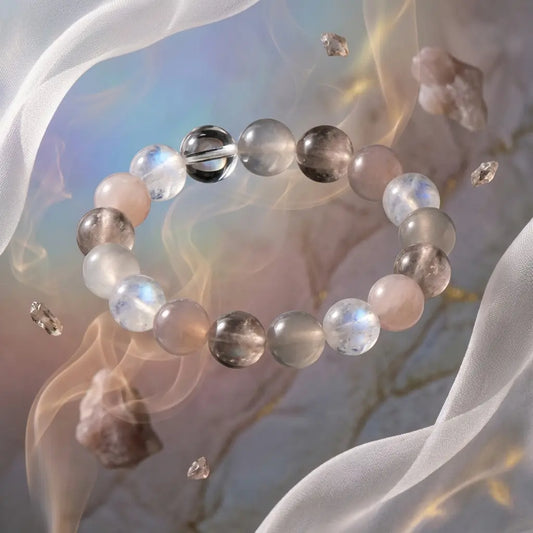
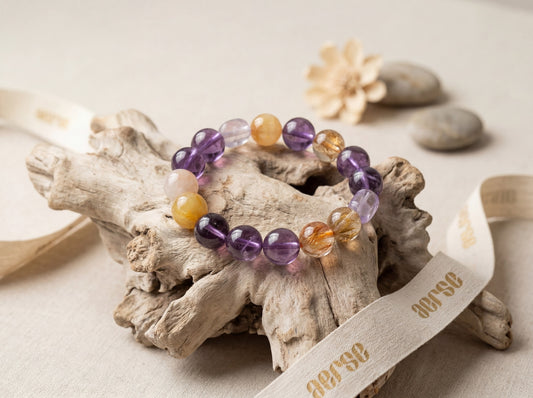
If you want the cleanest reference point, the Taurus Harmony Clear Quartz and Rose Quartz Bracelet demonstrates why clear quartz remains such a useful starting category. Its appeal is not complexity. It is the fact that the bracelet stays easy to pair with daily neutrals, soft tailoring, and understated stacks. That makes it especially practical for first-time crystal jewelry buyers.
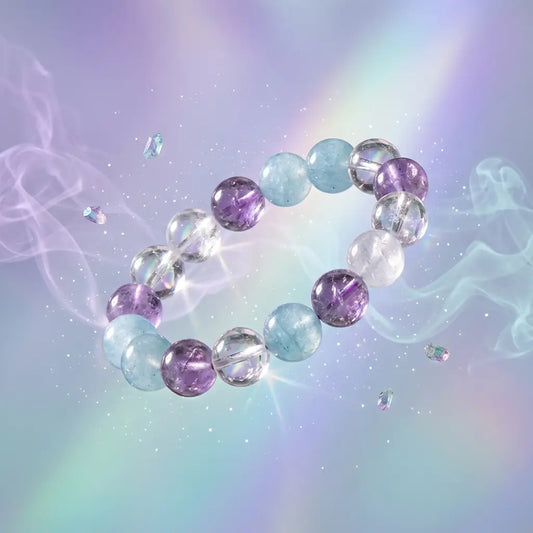
A fourth option, the Ethereal Clarity Aquamarine and Moonstone Bracelet, is useful because it shows how a design can stay airy while still incorporating a more distinctive quartz accent. If you are trying to understand whether you prefer a quiet luminous bracelet or one with a more visible internal pattern, comparing this style against the phantom and rutilated examples is a good shortcut.
Quick questions about crystal formations in bracelets
What is the easiest crystal formation for beginners?
Clear quartz is usually the easiest place to start because it has the widest styling range and the least visual friction with everyday outfits.
Is phantom quartz more subtle than rutilated quartz?
Usually yes. Phantom quartz often feels softer and deeper, while rutilated quartz tends to show a more obvious internal pattern from the start.
Why do people search for crystal formations before buying?
Because formation explains what photos alone do not always clarify: whether the bracelet will look clean, layered, or visibly textured once it is on the wrist.
Should I choose by symbolism or by appearance?
Appearance should come first. If a bracelet suits your real wardrobe and feels natural to wear, any symbolic meaning becomes easier to enjoy over time.
Crystal formations become much easier to understand once you stop asking which one is supposed to be best and start asking which visual language fits your life. Phantom quartz offers depth, rutilated quartz adds motion, and clear quartz keeps things open and versatile. If you choose from that perspective, the right bracelet usually becomes obvious much faster.