5 Things Experts Know About Crystals That Might Surprise You

Introduction: More Than Just a Pretty Stone
To most people, crystals are beautiful, shimmering stones, often associated with spirituality, wellness, and personal adornment. They are objects of natural beauty, admired for their clarity and color, and sought after for their perceived gentle energies.
But beneath this familiar surface lies a world defined by a fascinating tension: the conflict between a crystal's raw, geological identity and the human systems of value, technology, and art that shape it. The story of any crystal is a story of nature and nurture. Here are five counter-intuitive truths from the world of gemology that reveal this hidden dialogue and might change the way you look at your favorite stones.
--------------------------------------------------------------------------------
1. The Price Isn't About Rarity—It's About What People Like
It’s natural to assume that a crystal's price is determined by objective factors like geological rarity or exceptional quality. While those things play a role, the expert view reveals a more complex picture. The three major factors influencing price are market availability, crystal quality, and people's preferences. And of the three, popular demand is by far the most influential.
This reality makes the crystal market shockingly volatile and more akin to fashion than geology. A stone's value can be built not on millennia of geological processes, but on a single season's trend. A geologically common stone can see its value skyrocket if it captures the public imagination, while a rarer specimen might remain affordable if it stays out of the limelight. Quality and availability matter, but they are often secondary to the whims of human taste.
--------------------------------------------------------------------------------
2. The "Cool to the Touch" Test is a Myth
One of the most common pieces of advice for identifying a genuine crystal is to feel if it's cool to the touch. The idea is that real stone holds a natural coolness, while glass or plastic fakes will feel warmer. However, experts know this method is unreliable and a classic piece of market misinformation.
The coolness test is misleading because it's a subjective sensation, not a measurement. A crystal that has been sealed in bubble wrap for shipping, especially in summer, will naturally feel cool when first opened, regardless of what it's made of. Instead of relying on this myth, an informed amateur can use a much better test: checking for birefringence, or double refraction. Because of its hexagonal crystal structure, if you place a clear piece of quartz on a line of text, you should see the line double. While not foolproof, it's a far more scientific indicator of authenticity than a simple touch test.
--------------------------------------------------------------------------------
3. Before Wellness, Crystals Were High-Tech Tools of War
While we now associate crystals with peace and healing, they have a hidden history as critical components in high-stakes military technology. This is due to a scientific property called piezoelectricity, where crystals like quartz generate a precise electric charge when put under mechanical pressure.
This unique ability made them essential in the development of early electronics. During World War I, French physicist Paul Langevin harnessed this property to create the first sonar systems, which used ultrasonic waves generated by quartz to detect enemy submarines. The demand exploded in World War II, when the U.S. military urgently needed 5 million piezoelectric crystals to stabilize radio frequencies, ensuring clear and reliable communication for Allied operations. These stones, now seen as symbols of tranquility, were once indispensable instruments of global conflict.
--------------------------------------------------------------------------------
4. A Crystal's Color Is a Story of Impurities and Radiation
The stunning colors of crystals like deep purple amethyst or sunny citrine seem like an essential part of their nature. The surprising truth is that a pure crystal—which is simply silicon dioxide—is colorless. All of those vibrant hues are the result of external factors, tiny "imperfections" that create beauty. Each color is a unique recipe written by geology during the crystal's formation.
The specific color tells a story of the environment in which the crystal grew:
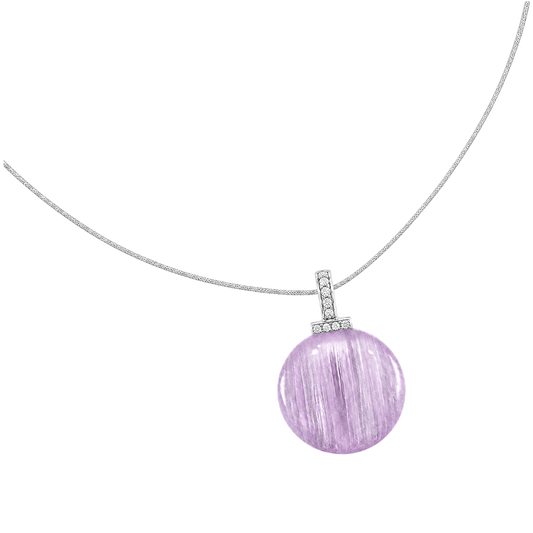
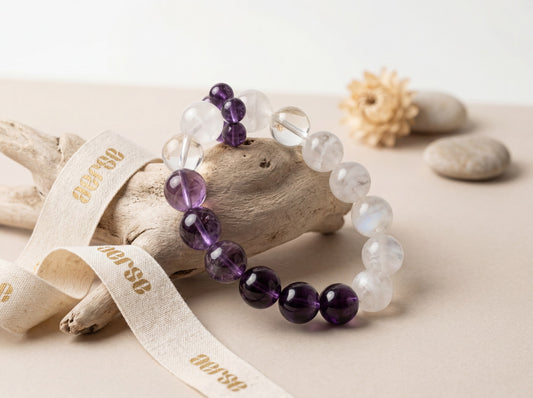
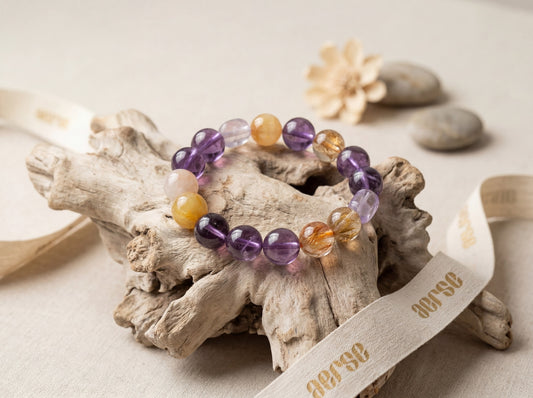
- Amethyst's purple comes from trace amounts of both iron (Fe³⁺) and manganese (Mn²⁺).
- Smoky quartz's brown or black shade is caused by traces of aluminum (Al³⁺) combined with exposure to natural radiation deep within the earth.
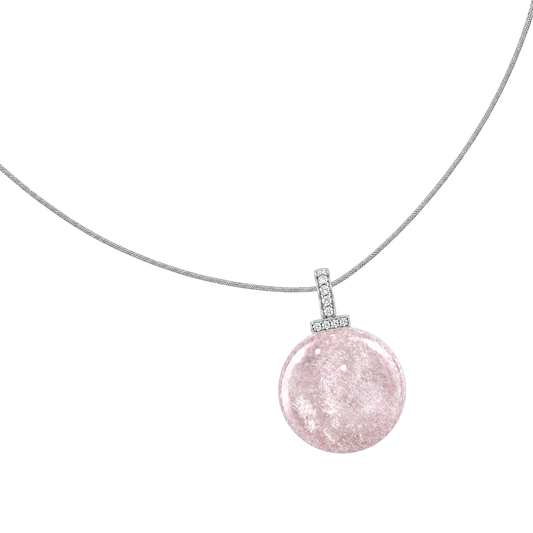
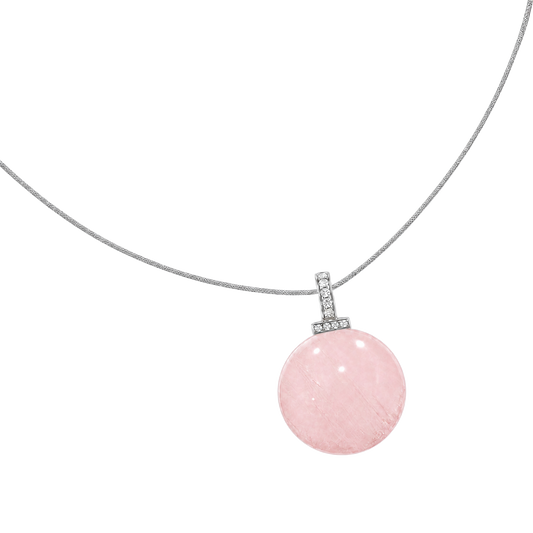
- Rose quartz gets its delicate pink from trace amounts of manganese (Mn²⁺) and titanium (Ti⁴⁺).
Furthermore, there are only seven varieties of naturally occurring pure-colored crystals. This is an essential piece of expert knowledge, as it means that any intensely colored red or blue crystals you encounter are almost always man-made fakes.
--------------------------------------------------------------------------------
5. The Golden Rule of Crystal Art: "Seven Parts Nature, Three Parts Artifice"
When it comes to the art of crystal carving, the most skilled artisans follow a guiding principle that translates to "seven parts natural, three parts man-made." This philosophy is central to creating a piece of true value and beauty.
It means that the artist's work should only enhance the natural character of the stone, not dominate or erase it. A carving that is too heavy-handed is seen as detrimental, as it strips the crystal of its unique form, inclusions, and history. The goal is a harmonious balance between human creativity and nature's raw creation.
"It's said that crystal carving is 'seven parts nature, three parts artifice.' If the carving is too heavy-handed, the piece loses the beauty and spirit of the crystal."
It's a philosophy that teaches a profound respect for the stone's journey, reminding us that true artistry doesn't impose a new story, but reveals the one already there.
--------------------------------------------------------------------------------
Conclusion: A New Way to See an Ancient Stone
From market economics to military physics and the philosophies of art, crystals are far more complex than they appear. They are not just passive objects of beauty but active participants in human history, shaped by our desires, our conflicts, and our creativity.
Now that you know the hidden stories of technology, trade, and artistry within these stones, does it change how you appreciate the tension between what the earth made and what humanity has made of them?