Whispers of the Cosmos: An Introduction to the Ancient Art of Magic

Introduction: Awakening to the Unseen
Since the dawn of consciousness, humanity has engaged in one of its oldest and most profound endeavors: the art of magic. Born from the innate desire to understand, commune with, and influence the world, magic is the system by which we seek to bridge the vast gap between our desires and our abilities. It is, in its purest form, a system of "making the impossible possible." Far from mere superstition, it represents a structured attempt to engage with the subtle energies and unseen forces that shape our reality.
This journey into the arcane will guide you through the ancient halls of history, exploring the origins of magical practice. We will examine the contrasting frameworks used to understand its mechanics—from the anthropological theories of scholars to the metaphysical principles of mystics. Finally, we will bring these concepts into the present moment, offering three foundational rituals for the modern seeker to experience these ancient currents firsthand. Let us open the book of ages and begin.
1. The Ancient Roots: Tracing Magic Through Time
The tapestry of magic is woven with threads from countless cultures across millennia. Its symbols and practices are not arbitrary but are rooted in a deep, intuitive understanding of the cosmos and humanity's place within it.
The Dawn of Magic: Shamanism
The earliest form of magic known to humanity is Shamanism. It is a universal system, invented independently by cultures across the globe as a method for a practitioner to communicate their wishes to the world of spirits and deities. This primordial practice laid the groundwork for all that would follow, establishing the fundamental principle that the physical world is interwoven with an unseen spiritual reality that can be perceived and influenced.
The Sages of the Forest: The Druids
Among the Celtic peoples, the Druids—whose name is said to derive from "daru vid," or "oak sages"—were a revered intellectual and spiritual class. More than mere priests, they were the judges, poets, political advisors, and philosophers of their society. Their path was arduous; training could last up to 20 years and required the memorization of a vast body of poetry, as their traditions were passed down orally.
The Druidic order was stratified into three classes:
- The Bard: The lowest-ranking class, responsible for memorizing and reciting the legends and genealogies of the clans.
- The Ovates: The seers and diviners who studied natural science, performed sacrifices, and foretold the future.
- The Druid: The highest-ranking priests who oversaw matters of law, ethics, and religion, and served as the ultimate spiritual authorities.
Central to their practice was a deep reverence for nature, particularly the sacred mistletoe. They believed this plant, when growing on an oak, held a divine power. The ritual for its harvest was precise and sacred: on the sixth day of the moon, a Druid clad in a white robe would climb the oak and cut the mistletoe with a golden sickle. Other priests would stand below, holding a white cloth to catch the plant, for its magic would vanish if it ever touched the ground.
Creating Sacred Space: The Magic Circle
The concept of a magic circle as a concentrated space of power has ancient origins, vividly illustrated by the story of a man named Honi in 65 BCE. During a severe drought, Honi offered prayers for rain, but the heavens remained silent. He soon realized his error: he had forgotten to "lay a foundation for the divine power to work."
Correcting his mistake, Honi drew a circle on the ground, stepped within its bounds, and made his plea once more. This time, the rains came. This act demonstrated the fundamental purpose of the circle: to create a sacred, consecrated space, separate from the mundane world, where spiritual energy can be concentrated and magic can be worked effectively and safely.
2. The Logic of the Unseen: Scholarly Theories vs. Spiritual Principles
These ancient practices, from the Druid's ritual to Honi's circle, were not random acts but expressions of an intuitive logic. To truly grasp their power, we must now turn from the "what" to the "how," examining the two great frameworks—one academic, one esoteric—developed to explain the very engine of magic.
The Anthropologist's Lens: Sympathetic Magic
From a scholarly perspective, the 19th-century anthropologist Sir James Frazer proposed a unifying theory called "Sympathetic Magic." He argued that all magical thinking is governed by a single principle: things that have once been in contact with each other continue to act on each other at a distance. He divided this principle into two primary applications:
- The Law of Similarity: This is based on the maxim that "like produces like." An effect can be produced by simply imitating it. The classic example is the creation of a doll or effigy in the shape of an enemy; any action performed upon the doll is believed to manifest upon the person it represents.
- The Law of Infection (or Contagion): This law posits that things which have once been in physical contact maintain a mystical link even after they are separated. Therefore, a magician can influence a person by performing a spell on something that was once part of them, such as their hair, nails, or a piece of their clothing.
The Mystic's Framework: The Three Pillars of Magic
In contrast to the external, observational theories of anthropology, practitioners often rely on an internal, metaphysical framework. The influential 19th-century occultist Eliphas Levi articulated three fundamental laws that form the pillars of this mystical worldview:
- The Law of Correspondence: This is the belief that the human being is a small universe (Microcosm) that is a perfect reflection of the great universe (Macrocosm). As above, so below; what happens in the cosmos is mirrored within the individual, and vice versa.
- The Power of Will: This theory holds that human willpower is not merely a psychological drive but a real, tangible force, akin to electricity or steam. Through proper training and discipline, this force can be directed to accomplish anything and create tangible change in the world.
- The Astral Light: This is the concept of a subtle, fluid substance that fills the entire universe. It acts as the universal medium, the repository of all forms and ideas, which makes magic and miracles possible. A trained magician, through the power of their will, can control and direct the Astral Light to manifest their intentions.
3. Touching the Aether: Three Foundational Practices for the Modern Seeker
Having journeyed through history and theory, we now arrive at the heart of the matter: experience. The following rituals are not mere recipes; they are living applications of the principles we've discussed. In the ritual bath, we find the echo of the magic circle's sacred space. In the breathwork, we feel the Power of Will, and in the empowering of a talisman, we see Sympathetic Magic in action.
1. The Ritual Bath: Cleansing Body, Mind, and Spirit
A ritual bath serves to purify the practitioner on all levels—physically, mentally, and spiritually. It is an essential preparation for any formal ceremony, but it can also be used simply to wash away the accumulated negative energies of a difficult day. This practice directly invokes the principle of creating a sacred space, much like Honi's circle, separating the mundane from the magical.
- Fill a bathtub with warm water. With your finger, trace a water-banishing pentagram over the surface to purify it.
- Add three drops of a purifying essential oil or perfume to the water. Stir clockwise three times with your hand.
- Place purifying herbs (like sage or lemongrass) into a filter bag and add it to the bath.
- Light two candles, turn off the electric lights, and ask a holy spirit or divine presence to cleanse your body, mind, and soul.
- Enter the tub and soak, relaxing completely. Breathe deeply three times, and with each exhalation, imagine all negativity, stress, and obstacles being released from you.
- After washing and drying yourself, take a moment to offer a prayer of thanks to the divine for the purification you have received.
- Drain the tub. As the water flows out, visualize all negative influences being carried away with it, leaving you renewed and clear.
2. The Butterfly Healing Breath: Connecting with Universal Energy
This is a simple yet potent breathing technique designed to balance the mind and body by consciously connecting with the universal life force. This exercise is a direct application of Eliphas Levi's theory of Willpower as a tangible force, consciously directing the 'Astral Light' or universal energy into the personal 'Microcosm'.
- Stand comfortably and place your hands over your heart. Take a deep, centering breath.
- As you continue to inhale deeply, raise your arms straight up towards the sky. In your mind, feel yourself connecting to the ultimate source of universal healing energy.
- As you exhale slowly, bring your hands back down to your sides, visualizing yourself drawing that immense power down into and through your entire being.
- Repeat this sequence ten times, feeling the healing energy building within and around you with each breath.
3. Empowering a Personal Talisman (The CCE Method)
The CCE process is a fundamental technique for preparing any object—a piece of jewelry, a stone, or a tool—for a specific magical purpose. The acronym stands for its three core stages:
- Cleanse: To remove any pre-existing or impure energies from the object using the powers of the four elements.
- Consecrate: To bless the object and dedicate it to a divine purpose in the name of a chosen deity or holy spirit.
- Empower: To charge and activate the object's energy for a specific goal, such as protection, attracting love, or promoting health.
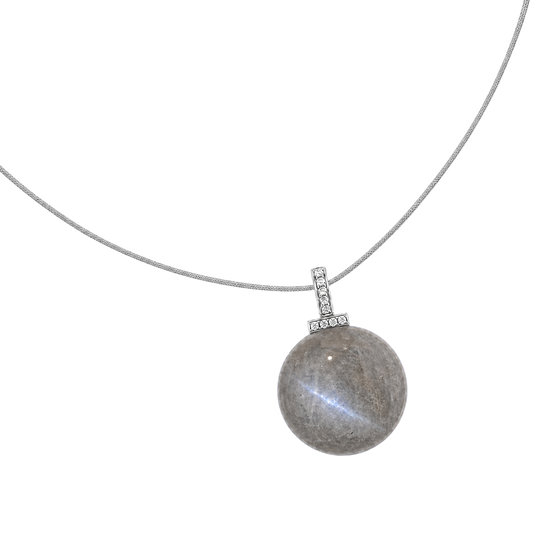
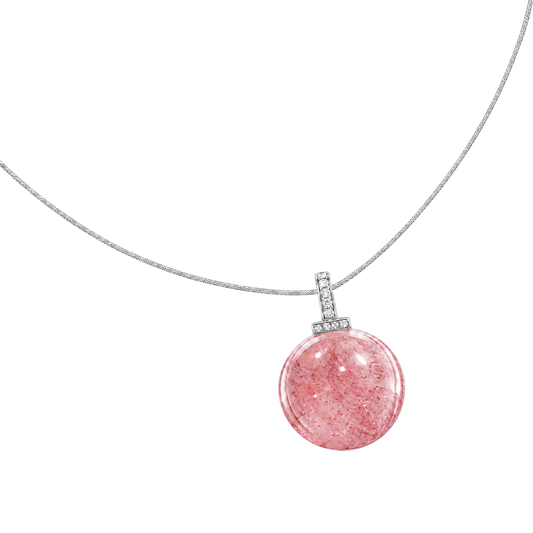
The logic here is a perfect example of Sir James Frazer's 'Sympathetic Magic'; by using the elements (similarity) and objects personal to the user (contagion), a powerful metaphysical link is forged. The process is performed within a created sacred space. You would take the object (for example, a necklace you wish to use for protection) and purify it by passing it through the four elements in sequence: sprinkling it with holy water (Water) and salt (Earth), passing it through incense smoke (Air), and passing it quickly and safely through a candle flame (Fire). At each step, you would recite specific prayers to command the elements to drive out all impurities and then fill the object with the divine energy of your specific intention, sealing it for its purpose.
Conclusion: Your Universe Within
Our journey has taken us from the ancient groves of the Druids and the rain-summoning circle of Honi, through the intellectual constructs of Frazer and Levi, and into the tangible experience of personal ritual. We have seen that magic, at its heart, is a timeless human art. It is the practice of using focused will and disciplined imagination—the potent forces of our own "Microcosm"—to create intentional change in harmony with the greater "Macrocosm" that surrounds us.
The path of the magician is a path of self-knowledge and cosmic alignment. It is the understanding that the universe is not something separate from us, but something that flows through us. The greatest mysteries are not hidden in forgotten tomes or distant stars, but in the boundless universe that lies waiting to be discovered within you.