Crystal Formations in Bracelets: Rutile, Phantom, and Needle Quartz

Crystal formation searches are useful because they usually come from a curious shopper, not a casual browser. Someone searching for crystal formations, crystal configurations, or types of crystals is trying to understand what they are seeing inside a stone before they choose a bracelet. Aerse's local Search Console exports show that these queries have impressions but still need clearer product-led answers, especially around rutilated quartz, phantom quartz, and visible internal detail.
This guide focuses on what formations look like in bracelet beads: fine needles, layered phantom shapes, cloudy zones, clear windows, and color suspended inside quartz. The goal is practical. Once you know whether you are drawn to linework, inner landscapes, or clean transparency, it becomes much easier to compare Aerse products such as Starry Sky Green Phantom, Blue Needle Clear Quartz, White Rutilated Quartz, Green Rutilated Quartz, and Clear Quartz.
Use crystal symbolism as supportive language, not as a promise. A bracelet can mark an intention, a season, a gift, or a style direction. It should not be framed as a fixed outcome tool for wellness, finances, protection, or life results.
Quick answer: what is a crystal formation in jewelry?
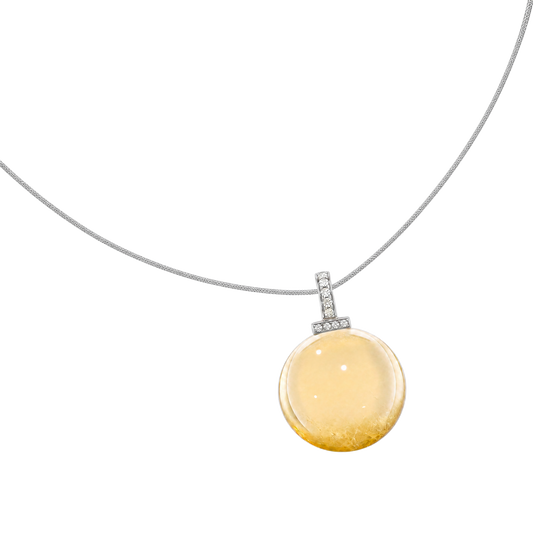
In jewelry shopping, a crystal formation is the visible structure, inclusion, layer, or light effect that gives a bead its character. It is not only the stone's color. A green bracelet can look linear if the quartz contains rutile threads, misty if it contains phantom layers, or clean and bright if the quartz is mostly transparent. Those details change how the piece feels on the wrist.
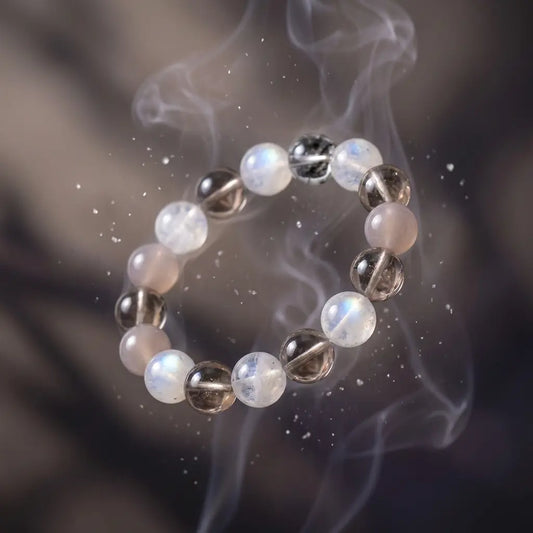
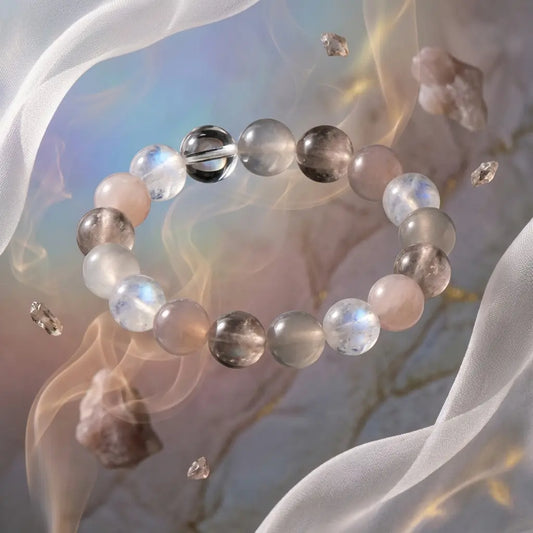
For bracelet shoppers, the most useful formation families are easy to spot. Rutile appears as fine internal needles or threads. Phantom quartz shows layered, ghost-like zones that can look like a landscape inside the bead. Blue needle quartz has crisp blue linework in clear quartz. Moonstone-like stones are often recognized by glow or flash rather than a strong internal line.
This is why formation-led shopping is more specific than color-led shopping. Color tells you whether a bracelet fits your wardrobe from a distance. Formation tells you why the bracelet keeps your attention up close.
Rutile formations: fine threads with visible movement
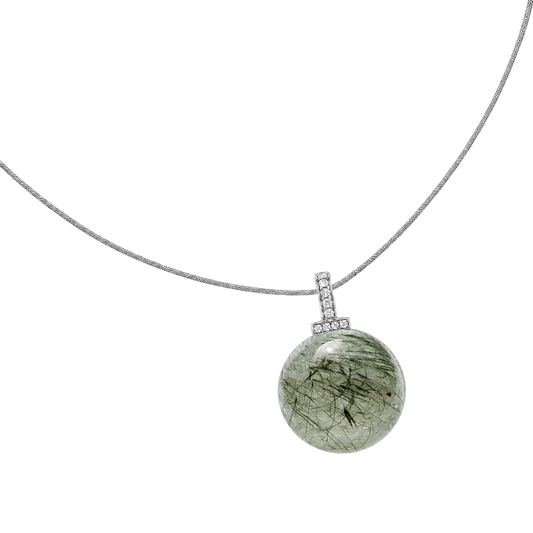
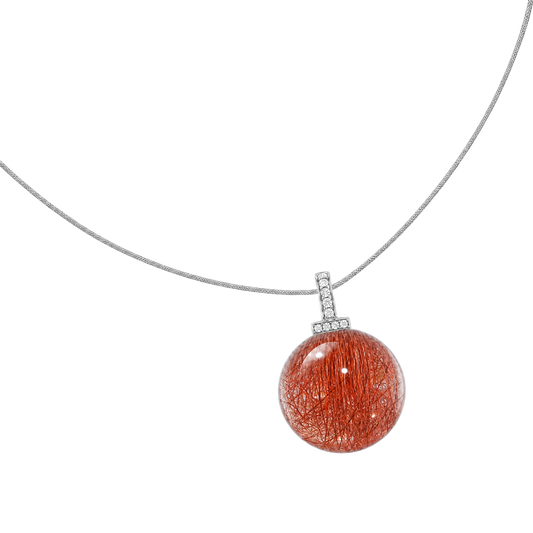
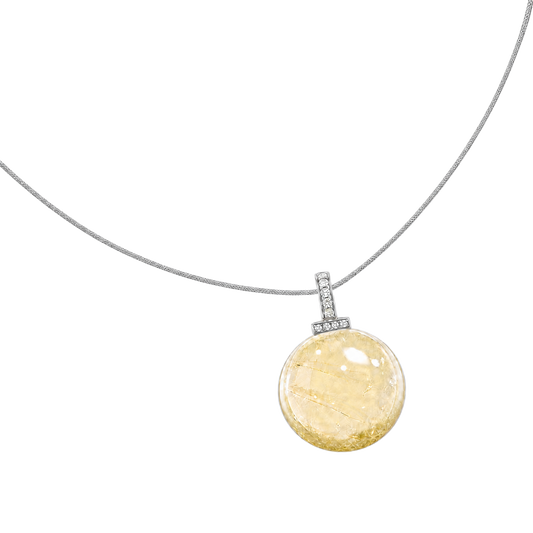
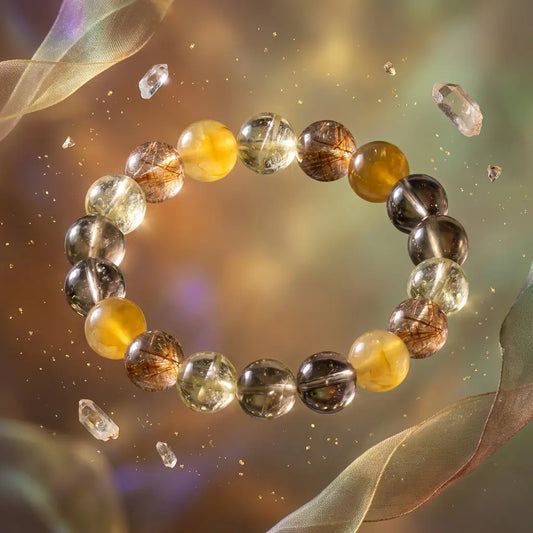
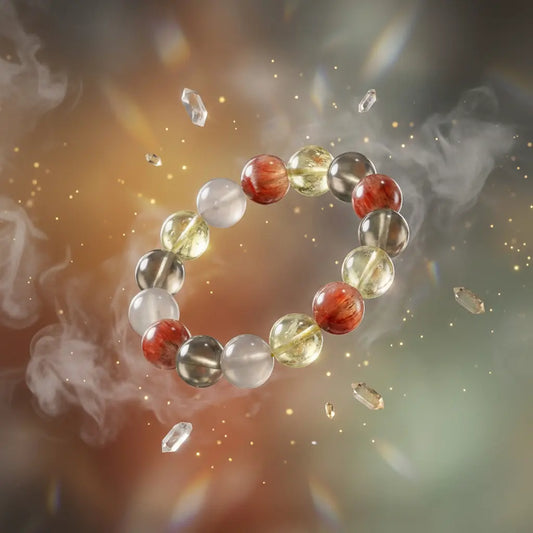
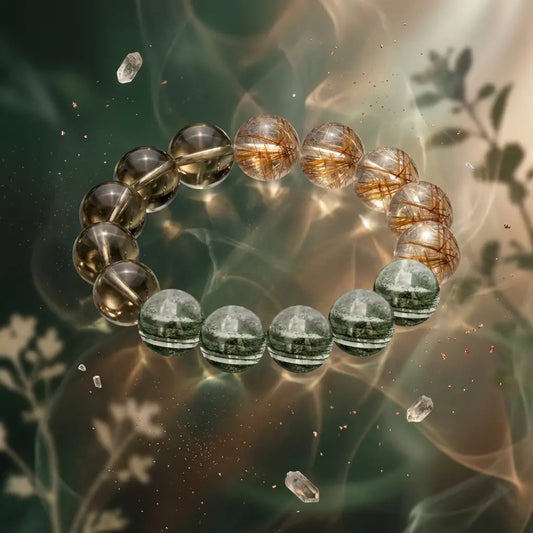
Rutilated quartz is the clearest formation to start with because the inclusions are usually visible without special knowledge. The stone contains fine needle-like lines inside quartz, and those lines can read green, white, gold, yellow, red, or blue depending on the product and light. In bracelet form, rutile creates movement from bead to bead, so the wrist stack feels natural rather than uniform.
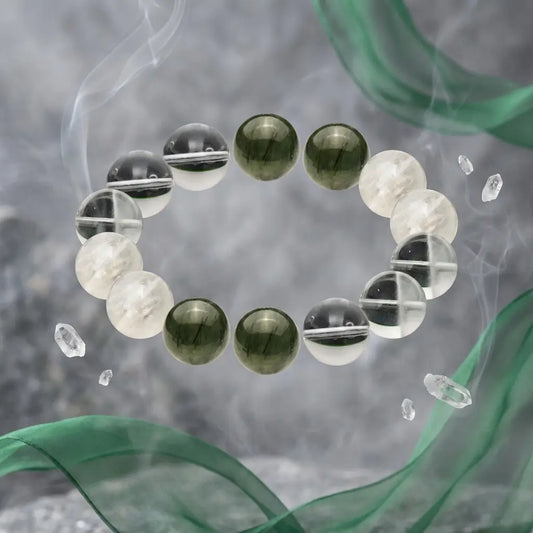
Green Rutilated Quartz is useful for shoppers who want a botanical, cool-toned bracelet with visible internal linework. It works well with white shirts, black basics, denim, moss green, cream, and simple metal accents. If you like the idea of a green bracelet but want it to feel detailed rather than flat, this is the clearest Aerse comparison point.
White Rutilated Quartz keeps the formation idea but makes the palette more neutral. It is a better first choice for someone who likes pale bracelets, office-friendly styling, or a cleaner stack. Gold Rutilated Quartz gives the same threaded structure a warmer and dressier mood. Choose by wardrobe first: white rutile for bright neutral repetition, green rutile for nature-led color, and gold rutile for richer warmth.
Phantom formations: layered shapes and inner landscapes
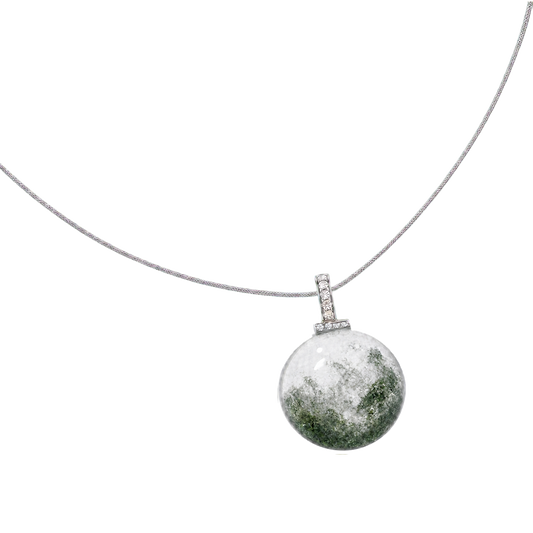
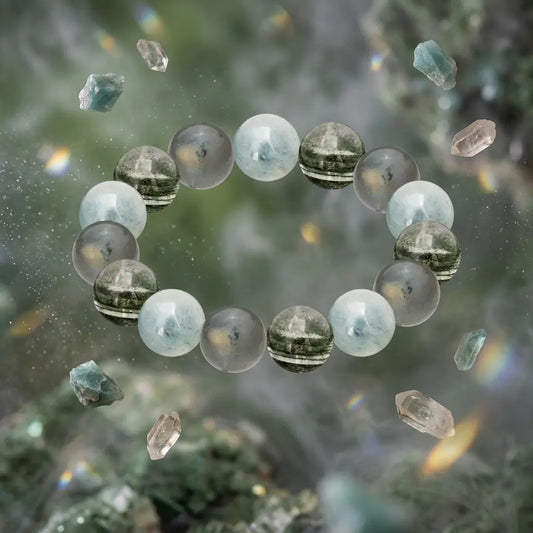
Phantom quartz creates a different kind of visual interest. Instead of thin lines, phantom formations often show cloudy bands, ghost-like outlines, or layered shapes inside the bead. The effect can feel quieter and more dimensional than rutile. It is a strong choice for shoppers who want a bracelet that reveals detail slowly rather than immediately.
Starry Sky Green Phantom is the most direct Aerse product for this formation-led question. Compared with Green Rutilated Quartz, it feels more layered and atmospheric. The green appears through internal scenery rather than needle-like threads, so the bracelet reads as moodier and more organic.
Phantom quartz is especially useful for gifting when the recipient likes natural variation. You do not need to overexplain the meaning. A grounded gift note can say that you chose the bracelet because the inner layers looked deep, calm, and distinctive. That keeps the symbolism personal while letting the visible stone do the real work.
Needle quartz: crisp linework in a clearer body
Needle quartz sits close to rutilated quartz in a shopper's mind because both involve internal lines. The difference is often the mood of the linework. Blue Needle Clear Quartz has a clearer, cooler, more graphic look than many warm rutilated quartz pieces. The blue detail makes the bracelet feel precise and modern, especially with white, grey, navy, pale denim, black, and silver-tone jewelry.
This product also helps answer AI and search follow-up questions such as what blue needle quartz looks like, why needle inclusions matter, and how to style clear quartz with blue internal detail. The practical benefit is visual clarity: the bracelet gives a cool-toned focal point without needing a large charm, heavy metalwork, or a bright opaque stone.
Choose Blue Needle Clear Quartz if you want formation detail but still prefer a clean transparent base. Choose White Rutilated Quartz if you want a paler neutral bracelet with softer internal movement. Choose Green Rutilated Quartz if the linework should feel more botanical and color-led.
Clear quartz as the control piece
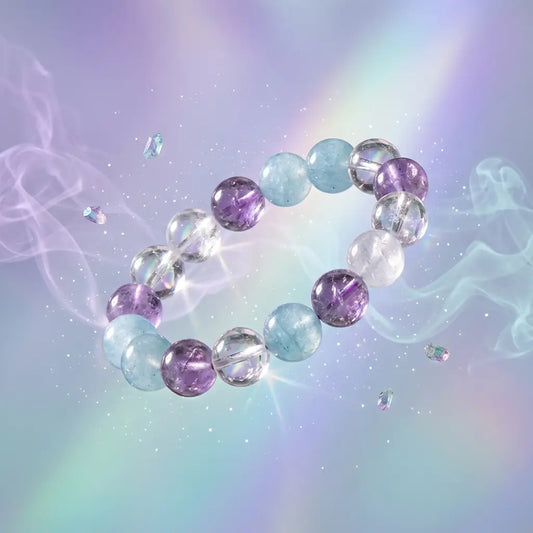
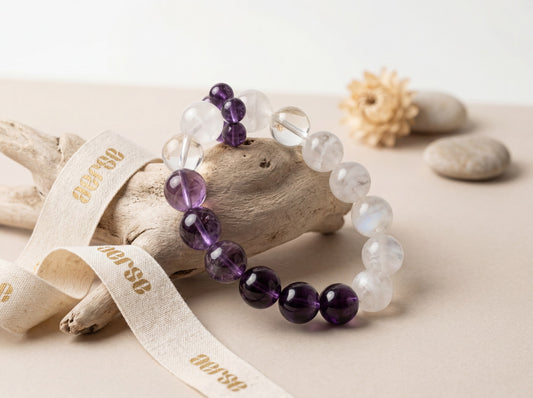
Clear quartz is useful in a formation guide because it gives shoppers a clean reference point. When a bead has fewer visible inclusions, the appeal comes from transparency, brightness, and how easily it layers with other stones. Clear Quartz can make a bracelet stack feel less crowded beside rutilated quartz, phantom quartz, citrine, moonstone, or amethyst.
If you are buying your first Aerse bracelet, clear quartz is the safest neutral. If you already own clear quartz, a formation-led piece is the next logical step because it adds character without changing the basic bracelet format. Think of clear quartz as the anchor and formations as the detail: rutile for threads, phantom for layers, and blue needle quartz for crisp internal lines.
For late-July and August gift planning, this comparison is helpful because it turns a broad search into a real buying decision. A clear bracelet is easiest to repeat; a rutilated bracelet feels more distinctive; a phantom bracelet feels deeper and more atmospheric; a blue needle bracelet feels cooler and sharper.
Formation-led comparison table
| Formation clue | What to look for | Aerse product to compare |
|---|---|---|
| Phantom layers | Ghost-like zones, inner landscapes, misty depth | Starry Sky Green Phantom |
| Blue needle lines | Crisp blue linework inside clear quartz | Blue Needle Clear Quartz |
| White rutile threads | Pale internal needles with a clean neutral palette | White Rutilated Quartz |
| Green rutile threads | Cool green internal lines with botanical detail | Green Rutilated Quartz |
| Golden rutile threads | Warm internal linework with a dressier mood | Gold Rutilated Quartz |
| Clear body | Transparency, brightness, and easy stacking | Clear Quartz |
The table is a shortcut, not a rule. Natural crystals vary, product photos can shift with lighting, and each bracelet may show slightly different bead character. Use the strongest visible clue to narrow your options, then choose the product page that best matches your wardrobe and daily use.
How to choose by formation, not just meaning
Start by naming what your eye likes. If you keep noticing fine threads, shop rutilated quartz first. If you keep noticing layered depth, shop phantom quartz first. If you want linework but a cooler and more transparent look, compare blue needle quartz. If you want the bracelet to disappear easily into a stack, use clear quartz as the anchor.
Then ask how visible the bracelet should be. Formation-heavy stones often invite closer attention. That can be ideal for a personal bracelet, a thoughtful birthday gift, or a piece that makes a simple outfit feel more specific. If the wearer prefers quiet jewelry, choose a lighter formation such as White Rutilated Quartz or a simple Clear Quartz bracelet. If they like a more distinctive wrist stack, Starry Sky Green Phantom or Green Rutilated Quartz may feel more memorable.
Finally, keep care simple. Store bracelets separately from sharper jewelry, wipe them with a soft dry cloth after wear, and avoid harsh cleaners, perfume overspray, swimming, or prolonged moisture. Practical care is part of making the bracelet meaningful because it helps the piece stay in regular rotation.
Common questions about crystal formations
What is the difference between rutile and phantom quartz?
Rutile usually appears as fine internal needles or threads. Phantom quartz usually shows cloudy layers, ghost-like outlines, or inner landscape shapes. Both add visual detail, but they create very different bracelet moods.
Is blue needle clear quartz the same as clear quartz?
Blue Needle Clear Quartz has visible blue internal linework, while Clear Quartz is chosen for a cleaner transparent look. If you want formation detail, choose blue needle quartz. If you want a neutral anchor, choose clear quartz.
Which crystal formation is best for a first bracelet?
If you want the easiest everyday option, start with Clear Quartz or White Rutilated Quartz. If you want a more distinctive bracelet, compare Green Rutilated Quartz, Gold Rutilated Quartz, and Starry Sky Green Phantom.
Should I choose crystal bracelets by meaning?
Meaning can make a bracelet more personal, but appearance, comfort, and wearability should lead the decision. The safest long-term choice is the piece whose color and formation you will enjoy wearing often.
Can crystal formations promise a fixed result?
No. Formations can carry personal symbolism and visual appeal, but they should be treated as design and meaning cues, not outcome tools for wellness, protection, finances, or life circumstances.
The best formation-led bracelet choice starts with a simple observation: threads, layers, linework, or clarity. Once you can name the detail, the product comparison becomes cleaner, the gift note becomes more believable, and the bracelet is more likely to stay useful after the first impression.