
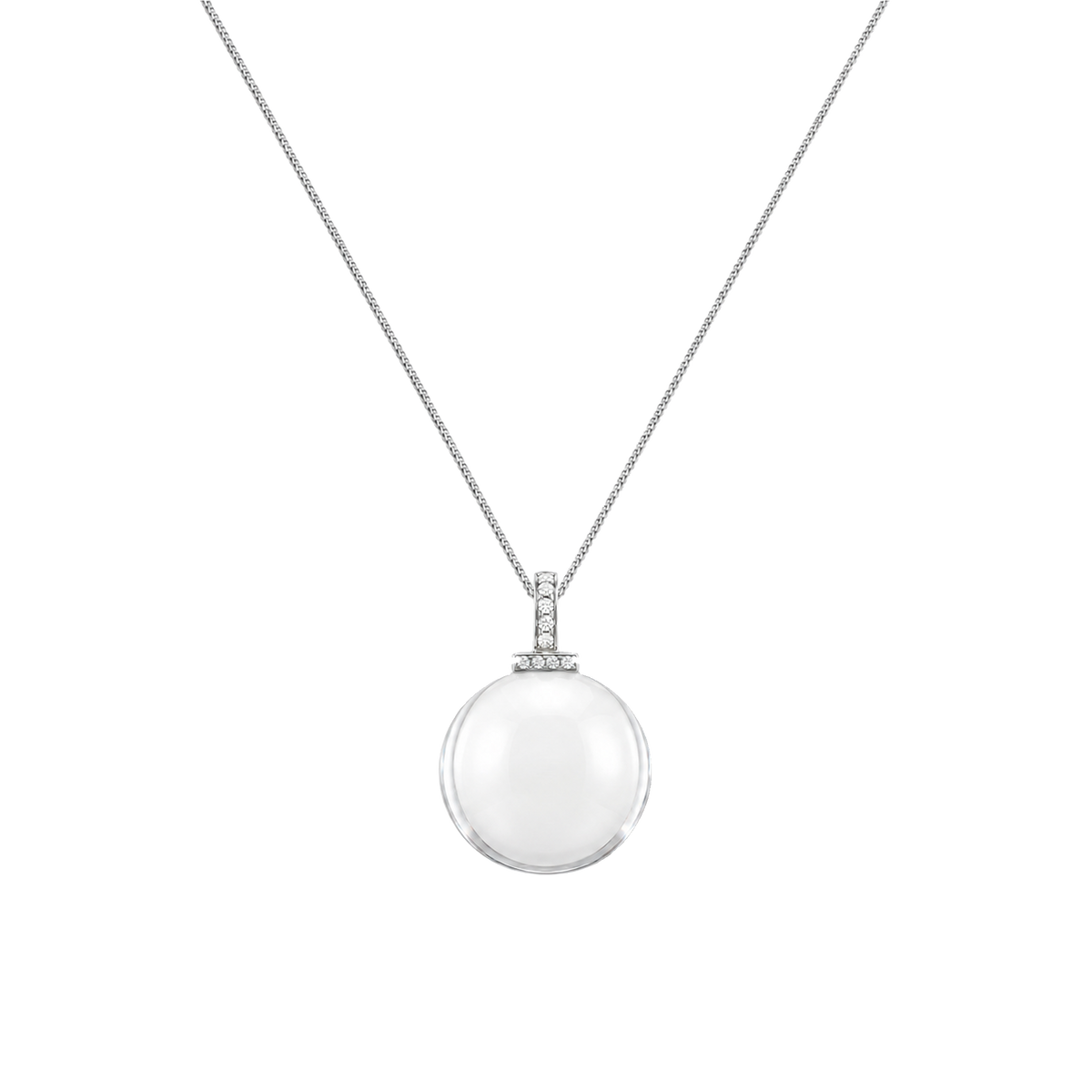
Crystal formation searches often begin with a close look at a stone: a fine thread, a misty layer, a small landscape, or a color line that seems suspended inside quartz. Those details are more useful than a vague label because they tell you what the eye will notice first when the crystal becomes jewelry. This guide explains the visual language of crystal formations and helps you choose an Aerse piece by texture, color, and repeat-wear potential.
In this context, a formation is the visible character inside or across a stone. It may be a needle-like inclusion, layered growth, a clouded scene, or a clear body with a directional thread. These features can make two pale quartz pieces look completely different. They are also the simplest way to decide whether you want quiet depth, graphic linework, or a brighter, clearer finish.
Aerse treats crystal meaning as personal and symbolic. A pendant can be a reminder of a chosen mood, a meaningful gift, or a visual detail you enjoy wearing. The practical choice should still start with the stone's appearance, the clothes you reach for, and the product that you will want to wear often.
Quick Answer: What Are Crystal Formations?
Crystal formations are the visible patterns, layers, inclusions, or internal structures that give a stone its individual character. In quartz jewelry, the three easiest patterns to recognize are rutiles, phantoms, and fine needle-like inclusions. Rutiles look like threads or strands. Phantoms look like layered outlines, clouds, or interior landscapes. Blue needle clear quartz combines a light transparent body with fine blue directional detail.
If you want a quick product path, choose Gold Rutilated Quartz for warm, visible linework; choose White Phantom Quartz for pale layered depth; and choose Blue Needle Clear Quartz for clear brightness with a cooler blue accent. None is automatically better. Each formation changes the visual role of the jewelry.
Rutilated Quartz: Fine Threads and Visible Movement
Rutilated quartz is recognized by needle-like strands inside quartz. The threads may appear gold, green, red, or darker depending on the stone, and they make the crystal feel active even in a simple setting. From a normal viewing distance, rutiles tend to read as linework: they draw the eye across the stone and add a little flash when the pendant moves.
The Aerse Gold Rutilated Quartz Interchangeable Pendant Necklace is the right starting point for shoppers who want this texture to show clearly. Its warm internal lines work well with camel, cream, chocolate, black, olive, dark denim, and gold-tone details. For a quieter look, wear it over a plain knit or open-collar shirt and let the stone become the main visual texture.
In symbolic language, many wearers connect rutilated quartz with focus or forward movement. Keep that language personal rather than fixed: the threads can be a visual cue to return to a plan, a project, or a fresh-start intention. The immediate reason to choose it is still aesthetic. It is for someone who likes visible detail inside a crystal.
Phantom Quartz: Layers, Depth and Interior Scenery
Phantom quartz has a different visual rhythm. Instead of thin lines, it often shows layered shapes that can resemble mist, a smaller crystal outline, hills, or soft interior scenery. The pattern feels quieter than rutile because the eye discovers it gradually. That makes phantom quartz a useful choice for people who want a pale pendant that has more character than a completely clear stone.
The White Phantom Quartz Interchangeable Pendant Necklace suits minimal wardrobes especially well. Its pale color works with white, gray, navy, black, light denim, soft knits, and silver-tone jewelry. The layered formation gives an outfit dimension without introducing a strong color, which makes it easy to repeat through workdays, weekends, and gifting occasions.
People sometimes choose phantom quartz for a symbolic association with reflection or steady progress. A grounded approach is to let the interior layers remind you of a period, a place, or a small personal milestone. The formation does not need to promise an outcome to feel meaningful. Its appeal is the sense of depth you can see in the stone.
Blue Needle Clear Quartz: Clear Light with a Cool Accent
Blue needle clear quartz is useful when you like transparency but do not want a plain clear look. The quartz body stays light and bright, while fine blue lines add direction. The result is more subtle than a fully blue stone and more graphic than clear quartz alone. It can look crisp in daylight and more detailed up close.
The Aerse Blue Needle Clear Quartz works particularly well with white, charcoal, pale denim, navy, gray, black, and cool silver jewelry. It is also an easy choice when a necklace needs to feel fresh rather than seasonal. The blue detail adds interest without asking the rest of the outfit to match it exactly.
For readers arriving through searches for blue needle quartz, the useful distinction is simple: choose it for the contrast between a clear base and fine blue internal detail. It is a visual preference, not a rule about what the stone can do for you. Compare the product images at normal size and choose the piece whose linework you would enjoy seeing every day.
How to Choose a Formation by Your Wardrobe
| Formation | Choose it if you want | Easy wardrobe pairings | Aerse starting point |
|---|---|---|---|
| Gold rutile | Warm, graphic threads that catch the eye | Camel, cream, olive, black, brown, gold-tone details | Gold Rutilated Quartz |
| White phantom | Soft layers and a quiet sense of depth | White, gray, navy, black, light denim, silver-tone details | White Phantom Quartz |
| Blue needle clear quartz | A bright clear base with cool linework | White, charcoal, pale denim, navy, gray, silver-tone details | Blue Needle Clear Quartz |
Start with the colors you already wear, then decide how much texture you want at the neckline. Gold rutile is the most visibly warm and directional. White phantom is the softest and most atmospheric. Blue needle clear quartz feels clean and cool. If you are buying a gift, this wardrobe test is usually more useful than trying to select a stone from a long list of generalized meanings.
How to Read Product Photos Before You Choose
First, look at the formation before reading the name. Ask whether you are drawn to lines, layers, or a mostly clear body with one cooler accent. Next, check how the color reads against the chain and setting. A warm rutile can become the focal point of the outfit, while a pale phantom can blend into a more minimal look.
Then imagine the piece with two or three outfits you already own. If you wear black knitwear and camel outerwear, gold rutile will usually show well. If you prefer pale shirts, soft gray, and simple tailoring, white phantom may become the easier repeat pendant. If denim, navy, white, and silver dominate your wardrobe, blue needle clear quartz gives a sharper cool-toned option.
Finally, keep care straightforward. Store crystal jewelry away from sharp pieces, wipe it with a soft dry cloth after wear, and avoid leaving fragrance, lotion, harsh cleaners, or prolonged moisture on the stone or chain. Simple care preserves the look that made you choose the formation in the first place.
FAQ: Crystal Formation Types
What is the difference between rutile and phantom quartz?
Rutile usually appears as fine thread-like strands inside quartz. Phantom quartz usually appears as layered outlines, cloudy shapes, or interior scenery. Rutiles read as linework; phantoms read as depth.
Which crystal formation is easiest to wear every day?
White phantom quartz is often the easiest for minimal and neutral wardrobes. Gold rutile is best when you want more visible warm texture, while blue needle clear quartz works well for cool-toned outfits and a brighter clear look.
Are crystal formations natural?
A formation describes a stone's visible internal character. Product photos are the best place to judge the specific appearance of an individual jewelry piece, since natural variation can make each crystal look different.
Which Aerse pendant should I choose first?
Choose Gold Rutilated Quartz for warm threads, White Phantom Quartz for pale layers, or Blue Needle Clear Quartz for transparent brightness with blue linework.
Crystal formations are easiest to understand when you look for what the eye notices first: lines, layers, or clear light with a directional accent. Use that visual answer to narrow your Aerse choice, then let the product photos and your everyday wardrobe make the final decision.
